

Hourly Care vs Live-In Care: When Is It Time to Transition?

For many seniors, care needs do not change overnight. It can be hard to pinpoint the exact time to understand when it is time to make the transition from hourly care to live-in care. What are the options beyond hourly home care? And what are the differences between hourly care vs live-in care?
A loved one may begin with a few hours of assistance each week for housekeeping, meal preparation, transportation, or companionship. Over time, however, those needs often increase. What once required a few visits per week may eventually require support throughout the day.
As a result, many families find themselves asking:
“How do we know when hourly care is no longer enough?”
Understanding the differences between hourly home care and live-in care can help families plan ahead and make informed decisions before a crisis occurs.
What Is Hourly Home Care?
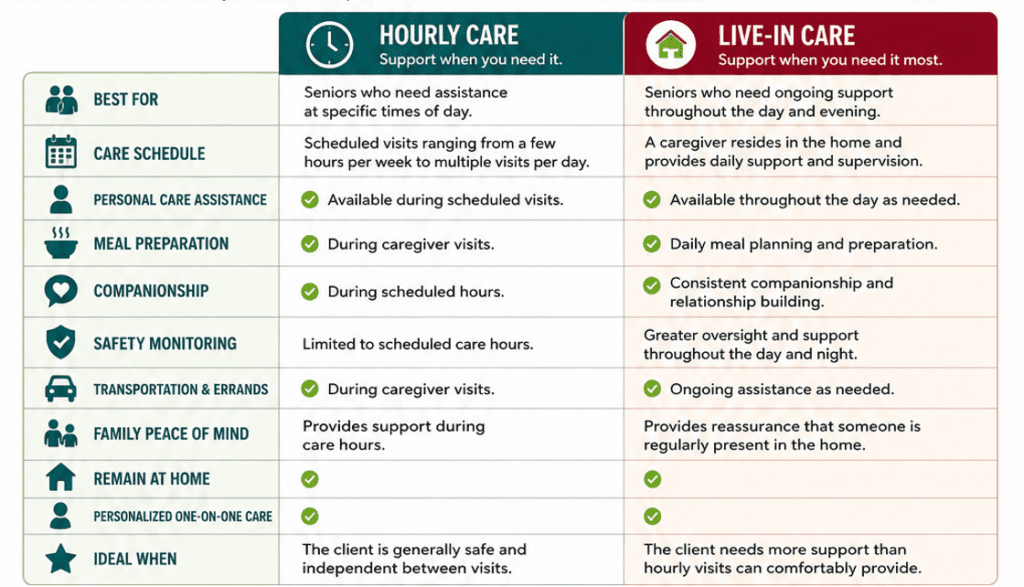
Hourly home care provides assistance during scheduled visits based on a client’s individual needs.
Caregivers may provide support for a few hours each day, several days each week, or even multiple visits throughout the day.
Hourly care can help with:
- Personal care and hygiene
- Meal preparation
- Medication reminders
- Transportation
- Light housekeeping
- Laundry
- Companionship
- Errands and shopping
For many seniors, hourly care provides exactly the right amount of support while allowing them to remain independent at home.
What Is Live-In Care?
Live-in care provides a higher level of support for individuals who need ongoing assistance throughout the day.
A live-in caregiver resides in the home and becomes a consistent presence, helping with daily routines, safety supervision, personal care, meals, companionship, and other non-medical needs.
While hourly care focuses on support during scheduled visits, live-in care offers greater continuity and oversight throughout the day.
Signs That Hourly Care May No Longer Be Enough
There is no specific number of care hours that automatically indicates a need for live-in care. Instead, the decision is often based on changes in safety, health, and quality of life.
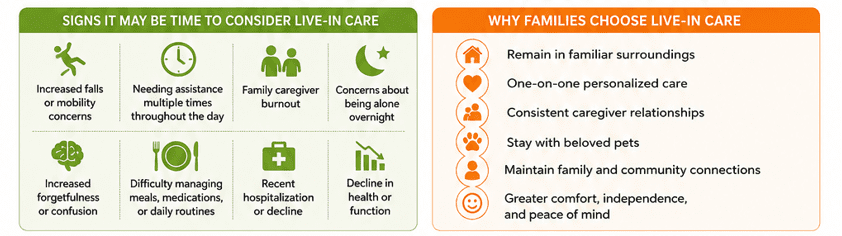
Families may want to explore live-in care if they notice:
Increasing Safety Concerns
Falls, mobility challenges, or difficulty navigating the home independently may indicate a need for more consistent support.
Care Needs Throughout the Day
When assistance is needed from morning until evening, coordinating multiple caregiver visits can become complicated and disruptive.
Family Caregiver Burnout
Many families supplement hourly services by providing care themselves. Over time, this can become physically and emotionally exhausting.
Difficulty Being Alone
Some seniors become anxious when left alone for extended periods. Others may struggle with memory issues, forget medications, or neglect meals when no one is present.
Frequent Changes to the Care Schedule
If care hours are continually being increased, it may be worth evaluating whether a live-in arrangement would better meet the client’s needs.
Benefits of Transitioning From Hourly Care to Live-In Care
Greater Consistency
One of the biggest advantages of live-in care is consistency.
Rather than coordinating multiple shifts and caregivers throughout the week, clients benefit from a stable caregiving relationship with someone who understands their routines, preferences, and needs.
Enhanced Caregiver Matching
Live-in care often allows for stronger caregiver-client relationships because caregivers become more integrated into the client’s daily life.
This consistency can improve comfort, trust, communication, and overall satisfaction.
Fewer Gaps in Care
With hourly care, there may be periods when a client is alone between scheduled visits.
Live-in care significantly reduces these gaps and provides additional peace of mind for both clients and family members.
Continued Independence at Home
Many seniors fear that increasing care needs automatically means moving out of their home.
In reality, live-in care can often provide the support needed to continue aging in place while maintaining familiar routines, surroundings, and independence.
How Live-In Care Compares to Assisted Living
When care needs increase, families often assume that assisted living is the next step.
However, live-in care may allow seniors to remain in the home they love while receiving individualized support.
Some families prefer live-in care because it offers:
- One-on-one attention
- Familiar surroundings
- Flexible daily routines
- The ability to remain with pets
- Greater privacy
- Personalized care tailored to individual preferences
Of course, every situation is different. Assisted living, memory care, or skilled nursing care may be appropriate depending on a person’s medical needs and overall circumstances.
Planning Ahead Creates Better Outcomes
One of the best times to discuss live-in care is before it becomes an urgent need.
Families who understand their options in advance are often able to make more thoughtful decisions and avoid stressful last-minute transitions.
If your loved one currently receives hourly home care and you have noticed increasing care needs, now may be the perfect time to start a conversation about what future support could look like.
We’re Here to Help
At Care at Home, we understand that care needs evolve over time.
Many of our clients begin with hourly services and later transition to live-in care as additional support becomes necessary. Our team works closely with families to evaluate changing needs, answer questions, and help determine the most appropriate care solution.
Whether hourly care continues to be the right fit or live-in care may offer additional benefits, we are here to help you explore your options and create a plan that supports safety, independence, and quality of life at home.
Because growing care needs should not automatically mean leaving home. Sometimes, the right next step is simply bringing more support into the place you already love.
Do you have a parent or aging loved one needing home care in Connecticut or Rhode Island? We can help.

